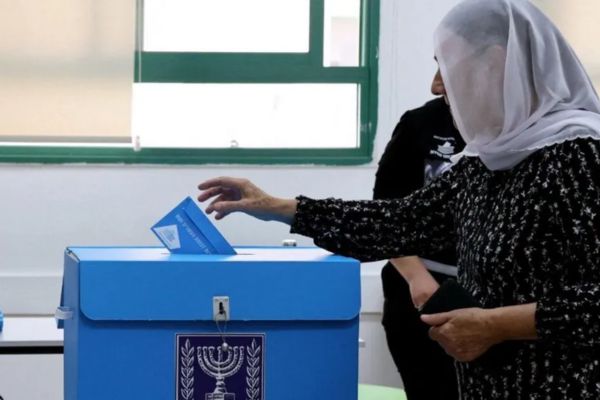
The Israeli election results have left Prime Minister Benjamin Netanyahu and opposition challenger Gadi Eisenkot competing for a path to power. Early figures point to a closely divided parliament, with neither camp securing the seats needed to govern alone.
As of October 28, 2026, the vote count remains incomplete. Reuters reports that Netanyahu’s bloc was projected to win 55 seats, while Eisenkot’s bloc was projected to take 50. Arab parties were projected to hold the remaining 15 seats, based on results reported after approximately 48.4% of votes had been counted. Reuters’ latest election report provides further details.
The outcome has created uncertainty over who will lead Israel’s next government. Although Netanyahu’s Likud party appears to retain significant support, his broader coalition still faces the challenge of assembling a parliamentary majority.
Meanwhile, Eisenkot has presented the result as a rejection of Netanyahu’s leadership. However, neither candidate has secured a clear path to forming a government.
Israeli Election Results 2026: Who Won the Election?
The short answer is that there is no confirmed overall winner yet. Preliminary results show a competitive race, but neither main political bloc has reached the threshold required to govern.
Israel’s parliament, known as the Knesset, has 120 seats. A government generally needs the support of at least 61 lawmakers to command a majority.
The latest figures reported by Reuters suggest the following distribution:
| Political grouping | Projected seats |
| Benjamin Netanyahu’s bloc | 55 |
| Gadi Eisenkot’s bloc | 50 |
| Arab parties | 15 |
| Total | 120 |
Source: Reuters, October 28, 2026. These are preliminary projections based on a partial vote count, not final certified results.
The figures may change as election officials count additional ballots. Consequently, early leads do not automatically determine which candidate will become prime minister.
The distinction matters because Israeli voters elect parliamentary representatives through a proportional system. Parties must negotiate and secure enough support to form a governing coalition.
Therefore, the question “Who won the Israel election?” remains unresolved while vote counting and coalition calculations continue.
Netanyahu Election Results: Is Benjamin Netanyahu Losing Power?
The Netanyahu election outcome represents a significant political test for Israel’s longest-serving prime minister. His Likud party remains a major force, but the preliminary numbers suggest that his existing right-wing and religious coalition could struggle to retain its parliamentary majority.
According to The Wall Street Journal’s report on early Israeli election results, Netanyahu’s party led among individual parties in the partial count. However, his coalition remained short of the majority needed to continue governing without securing additional support.
This distinction is central to understanding the Israeli election results. The party winning the most seats does not automatically secure the prime minister’s office. Instead, political leaders must demonstrate that they can assemble a coalition with sufficient parliamentary backing.
Netanyahu called for a strong right-wing government after the vote. He also highlighted his government’s security record and its relationship with US President Donald Trump.
Nevertheless, the preliminary outcome presents a challenge for his political future. If his allies cannot secure enough seats, Netanyahu may struggle to form another government.
A prolonged negotiation could also allow him to remain in a caretaker role while parties explore possible coalitions. That would not, by itself, establish that he had won another term.
Who Is Gadi Eisenkot, Netanyahu’s Main Challenger?
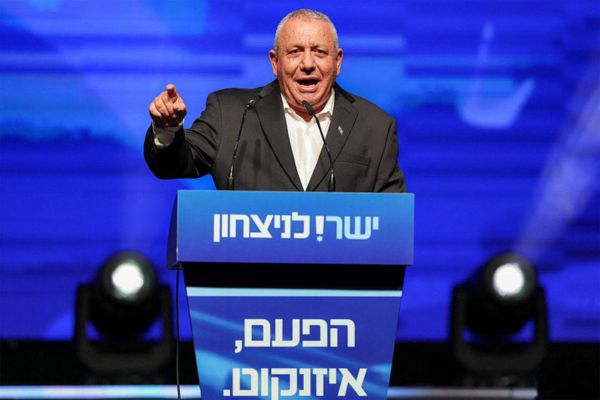
Gadi Eisenkot has emerged as a central figure in Israel’s latest election. A former chief of staff of the Israel Defense Forces, he brings extensive military experience to his political career.
Eisenkot leads the Yashar party and has positioned himself as an alternative to Netanyahu’s leadership. His campaign has emphasized security, national unity, and changes to the country’s political direction.
After the vote, Eisenkot argued that the public had rejected Netanyahu remaining prime minister. He also urged the incumbent leader to leave politics.
However, Eisenkot faces his own obstacles. His bloc has not secured the 61 seats required for a majority, and building a coalition could prove difficult.
Both major camps face complications over potential cooperation with Arab parties. Netanyahu’s bloc has ruled out forming a government with them, while Eisenkot has also largely ruled out that option.
Consequently, the final balance of parliamentary seats and the willingness of smaller parties to negotiate could determine Eisenkot’s chances of forming a government.
Why the Israeli Election Matters
The election carries significance beyond the immediate contest between Netanyahu and Eisenkot. It offers voters an opportunity to assess the government’s leadership following the Hamas-led attack of October 7, 2023, and the subsequent regional conflicts.
Several issues shaped the political debate.
1. National security and the wars
Security remained a central campaign issue. Netanyahu highlighted military operations and argued for continued cooperation with the United States.
Eisenkot, meanwhile, drew on his military background while criticizing Netanyahu’s leadership. The competing approaches reflect broader disagreements about security policy, responsibility for past failures, and Israel’s future direction.
2. Public confidence in Netanyahu
The election also tested public confidence in Netanyahu after the October 7 attacks and the wars that followed.
The preliminary results suggest that his political position faces considerable pressure. Still, the vote count does not establish a definitive verdict on his leadership until the results and coalition negotiations become clearer.
3. The role of Arab parties
Arab parties could hold an important position in the new parliament. Reuters’ preliminary projection assigned them 15 seats, potentially making them influential in discussions over the next government.
Their eventual role will depend on the final seat distribution and the willingness of other political groups to seek their support.
4. The possibility of prolonged political uncertainty
If neither major bloc can form a viable coalition, Israel could face weeks or months of negotiations. If those efforts fail, another election could eventually become necessary.
For now, the immediate challenge is determining which political leader can secure enough parliamentary support to govern.
Israeli Election Exit Polls vs. Official Results
The difference between exit polls and official results is especially important when following a close election.
Exit polls estimate voting patterns using surveys conducted around polling stations. They can provide an early indication of the likely outcome, but they do not replace the official count.
In Israel’s election, early television projections suggested a close contest between Netanyahu’s bloc and the opposition led by Eisenkot. Some projections showed a tie, while others gave one side a narrow advantage.
As counting progressed, preliminary estimates shifted. Reuters subsequently reported a projection of 55 seats for Netanyahu’s bloc and 50 for Eisenkot’s, with Arab parties projected to win 15.
These changing figures illustrate why headlines about a decisive victory can be premature.
The BBC’s coverage of the Israeli election and Reuters’ developing results coverage offer additional reporting for readers following the race.
Until officials complete the count and certify the results, the seat distribution should be treated as provisional.
What Happens Next After the Israel Election?
The next stage will focus on the final seat count and negotiations to form a government.
- Completion of the vote count: Election officials will continue counting ballots and establish the final distribution of parliamentary seats.
- Coalition negotiations: Political parties will explore potential alliances and determine whether either major bloc can reach 61 seats.
- Choosing a candidate: President Isaac Herzog will consult political leaders and invite the candidate most likely to form a government to attempt the task.
- Government formation: The candidate must build sufficient parliamentary support. If negotiations fail, another candidate or eventually another election may become necessary.
The process means the election result and the identity of Israel’s next prime minister are separate questions. Even a party with the largest number of seats may struggle to form a government without coalition partners.
For the latest developments, readers can follow Reuters’ coverage of the election and The Wall Street Journal’s results report.
Interested in Business News? Read our recent blog: SpaceX Launch Jellyfish: What Made the East Coast Sky Glow?
Frequently Asked Questions About Israeli Election Results
1. Did Netanyahu win the election?
As of October 28, 2026, there is no confirmed overall winner. Preliminary figures put Netanyahu’s bloc ahead in some counts, but it remains short of the 61 seats needed for a parliamentary majority.
2. Did Netanyahu lose the election?
Not definitively. The early results indicate a difficult political position for Netanyahu, but he could still attempt to form a government through coalition negotiations.
3. Who won the Israel election in 2026?
The final outcome remains unresolved. Netanyahu’s bloc and Eisenkot’s opposition are competing to assemble a governing majority, while Arab parties could influence the negotiations.
4. When will the Israeli election results be finalized?
Reuters reported on October 28 that definitive results would likely become available by Thursday, October 29. The timing may depend on the completion of counting and official verification.
5. What are the Israeli election exit polls showing?
Early exit polls showed a close race, with some projections putting the two major blocs at approximately 51 seats each. Subsequent preliminary figures shifted as votes were counted.
6. How many seats are needed to form an Israeli government?
The Knesset has 120 seats. A governing majority generally requires support from at least 61 lawmakers, usually through a coalition of multiple parties.
7. Could Israel hold another election?
Yes. If political leaders cannot form a viable government, another election could eventually become necessary. However, coalition negotiations would normally take place first.
Conclusion: Israeli Election Results Leave Israel Facing Uncertainty
The Israeli election results have created a closely contested political landscape, with Benjamin Netanyahu and Gadi Eisenkot facing different challenges in their efforts to lead the next government.
Although Netanyahu’s bloc appears competitive in the preliminary count, it has not secured a parliamentary majority. Eisenkot, meanwhile, has gained an opportunity to challenge the incumbent but must overcome his own coalition-building difficulties.
The final outcome will depend on the completed vote count, negotiations among political parties, and the ability of a candidate to secure sufficient parliamentary backing.
For now, the central question is not simply who received the most votes or seats. It is who can form a government capable of commanding the confidence of Israel’s parliament.
As official results emerge, the balance of power will become clearer. Until then, claims of a definitive victory or defeat should be treated with caution.