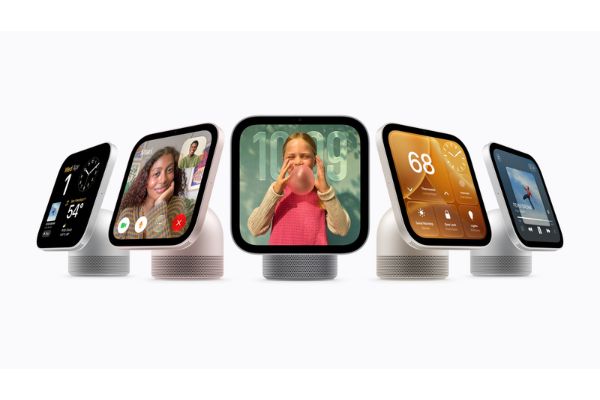
Apple is bringing a new screen into the connected home. With the introduction of Apple HomeView, the company is combining smart-home controls, entertainment, personalized information, and its latest Siri AI capabilities in a single device designed for everyday use.
Announced on October 13, 2026, as part of Apple’s “Welcome Home” product launch, HomeView marks the company’s entry into the dedicated smart-display category. The device features a 7-inch Liquid Retina display, facial recognition for household members, FaceTime support, and voice-controlled access to compatible smart-home accessories.
But what makes Apple HomeView different from an iPad, a HomePod, or competing smart displays from Amazon and Google? And is it worth considering for your home?
Here’s everything to know about Apple HomeView, including its price, features, release date, Siri AI integration, privacy protections, and the other products Apple announced alongside it.
What Is Apple HomeView?
Apple HomeView is a smart-home display designed to serve as a central hub for entertainment, communication, and connected-home management.
Unlike a conventional smart speaker, which relies primarily on voice commands, HomeView combines a touchscreen with a speaker system and Apple’s Siri AI assistant. This allows users to interact with their homes through voice commands, on-screen controls, and personalized information.
The device is designed for shared household spaces such as kitchens, living rooms, bedrooms, and hallways. It can sit on a tabletop or be mounted on a wall, depending on the model and accessories selected.
Apple says HomeView recognizes individual household members by their faces and adapts the experience accordingly. This means different people can access their own messages, calendars, reminders, and other supported personal content while still sharing music, photos, and smart-home controls.
The launch also represents a broader expansion of Apple’s connected-home strategy. Alongside HomeView, Apple introduced updates to its home entertainment devices and a collection of smart-home accessories developed with partners.
For Apple users who already own an iPhone, HomePod, Apple TV, or compatible smart-home accessories, HomeView is designed to bring more of those experiences together in one location.
Apple HomeView Price and Release Date
Apple HomeView starts at $299 in the United States for both the tabletop and wall-mounted versions. Apple opened preorders on October 13, 2026, with availability scheduled to begin November 13 in supported markets.
Here is the launch information at a glance.
| Detail | Apple HomeView |
| Starting price | $299 in the US |
| Display | 7-inch Liquid Retina |
| Processor | Apple A18 chip |
| Siri AI | Built in |
| Tabletop colors | Silver, starlight, rose pink, space gray |
| Wall-mounted colors | Silver, space gray |
| Preorders | October 13, 2026 |
| Availability begins | November 13, 2026 |
| Placement | Tabletop or wall-mounted |
The wall-mounted model requires a compatible mounting accessory. In the US, Apple’s announced mounting options start at $59.95 for the USB-C wall connector, while the wired AC option starts at $79.95. A Power over Ethernet mounting option is scheduled for early 2027.
Availability and prices vary by country. Apple has announced launch availability in the United States, United Kingdom, Canada, Australia, New Zealand, and India, among other markets. The company has also said that HomeView will not initially be sold in the European Union because Siri AI is not currently available in iOS there.
For buyers in Pakistan, the US price provides a useful reference point, but it should not be treated as a confirmed local retail price. Local availability, import duties, taxes, and reseller pricing may affect the final cost.
Source: Apple Newsroom — Meet Apple HomeView.
Apple HomeView Features: What Can It Do?
HomeView is designed to do more than display the time or respond to simple voice commands. Its main features combine familiar Apple services with a dedicated screen for managing the home.
1. A 7-Inch Liquid Retina Display
HomeView features a 7-inch Liquid Retina display connected to a speaker base through a stainless steel hinge.
The display can tilt to provide a more comfortable viewing angle on a countertop or bedside table. Apple has also designed the interface to adapt to the user’s distance, presenting simpler information when viewed from farther away and more detailed content when someone approaches.
Users can personalize the screen with different display faces. These can show a clock, photographs, weather information, and other at-a-glance details.
Apple also highlights animated visual experiences, including Snoopy-themed animations that can change according to the time of day, weather, sporting events, and holidays.
The screen is intended to make HomeView feel like a shared household display rather than a device that must be actively opened and operated every time someone needs information.
2. Siri AI and Apple Intelligence
Siri AI is central to Apple’s HomeView experience.
Apple says its updated assistant offers more conversational interactions, broader general knowledge, improved music discovery, and the ability to understand information displayed on the screen.
When paired with a compatible Apple Intelligence-enabled iPhone or iPad, Siri AI can also draw on personal context from supported apps to provide more relevant responses and help users take actions across apps.
For example, a household member might ask for information related to an upcoming calendar event or request help finding something in their personal information.
Some capabilities depend on having a compatible device. Apple says HomeView can still offer Siri AI’s general knowledge and music-discovery features without an Apple Intelligence-enabled iPhone or iPad, but more advanced personal-context features require a supported device.
This distinction matters for buyers who expect HomeView to operate independently of the rest of their Apple setup.
3. Personalized Experiences for Different Family Members
One of HomeView’s more distinctive features is its ability to recognize up to six different household members.
Rather than showing the same personal information to everyone, the device can adapt its interface to the person it recognizes. Supported content includes Messages, FaceTime, Calendar, Reminders, and Find My.
The idea is to combine the convenience of a shared family screen with the personalization people already expect from their own devices.
A family could use HomeView to display shared photographs and control household lighting while allowing individual members to access their own supported information.
Apple says personal content is protected through a combination of facial recognition, device-presence requirements, and dedicated security features.
4. Smart-Home Controls in One Place
HomeView is also designed to work as a central dashboard for compatible smart-home devices.
Users can ask Siri AI to adjust lights, change thermostat settings, lock supported doors, or close compatible blinds. They can also use the touchscreen to access controls directly.
Apple’s Home Modular interface provides quick access to favorite accessories, while a separate Home Camera interface can display up to nine camera feeds simultaneously.
This could make the device useful near an entryway or in a shared living space where people want to check cameras, monitor deliveries, or see what is happening around the home.
With a supported iCloud+ subscription and compatible cameras, HomeView can also provide encrypted recognition features for people, familiar faces, pets, packages, and vehicles. Apple says it can detect the sound of smoke or carbon monoxide alarms and send notifications to supported Apple devices.
These advanced capabilities depend on compatible accessories and, in some cases, additional subscriptions.
5. FaceTime, Messages, Music, and Everyday Entertainment
HomeView brings several familiar Apple experiences into a shared space.
Its Center Stage camera supports FaceTime calls, while Messages and other supported apps help users stay connected without reaching for their phones.
The device also supports music playback and offers a photo-display experience that can turn a shared album into a digital picture frame.
Its speaker system is designed to provide room-filling audio, making it suitable for listening to music while cooking, working, or relaxing at home.
However, HomeView is not simply a small iPad. It runs dedicated HomeView software rather than iOS or iPadOS, and its app selection is more limited.
WIRED reports that the device does not have a conventional App Store and that popular video-streaming services such as Netflix and YouTube are not available as dedicated apps at launch. Users can access some content through Safari, while third-party app availability depends on Apple’s supported ecosystem.
That limitation may matter to anyone expecting HomeView to function as a full entertainment tablet.
Apple HomeView vs. HomePod and iPad: What’s the Difference?
Apple already offers products that can handle some of HomeView’s functions. So why introduce a dedicated smart display?
The answer lies in how the device is intended to be used.
An iPad is a general-purpose tablet designed for mobile computing, productivity, browsing, and entertainment. A HomePod is primarily a smart speaker with voice assistance and smart-home functionality. HomeView combines elements of both in a device intended to remain accessible in a shared space.
| Feature | Apple HomeView | HomePod | iPad |
| Dedicated touchscreen | Yes | No | Yes |
| Voice assistant | Siri AI | Siri | Siri |
| Smart-home controls | Yes | Yes | Yes, through supported apps |
| FaceTime | Yes | No screen for video calls | Supported models |
| Personalized household display | Yes | Limited visual interface | General-purpose interface |
| General-purpose tablet computing | No | No | Yes |
HomeView’s appeal depends on whether users want a screen that is always available for household information and controls without dedicating an iPad to the task.
It could be useful for families who want a shared calendar, a camera dashboard, quick access to lighting controls, and a convenient place to make calls.
For users who mainly need voice-controlled music and basic smart-home commands, a HomePod may already meet their needs. Those who want a larger selection of apps and more flexible computing may prefer an iPad.
Apple HomeView vs. Amazon Echo Show and Google Nest Hub
Apple is entering a market in which Amazon and Google have already established smart displays and voice-controlled home ecosystems.
Amazon’s Echo Show lineup combines screens, Alexa, entertainment, video calls, and smart-home controls. Google’s Nest Hub products similarly focus on visual information, connected devices, and Google Assistant features.
HomeView’s main distinction is its close integration with Apple’s existing ecosystem and its use of Siri AI with personalized household information.
The strategy could appeal to users who already rely on iPhones, Apple services, and compatible HomeKit accessories.
However, price and flexibility will matter. At $299, HomeView costs more than many entry-level smart displays. Buyers will need to decide whether its Apple integration, dedicated interface, and privacy features justify the premium.
Axios notes that smart-home technology has not always delivered the seamless experience consumers were promised. Setup difficulties and compatibility problems have contributed to the category’s challenges, even as AI creates new opportunities for devices to work together more intelligently.
For Apple, HomeView is therefore not just about adding a screen. It is also a test of whether a more integrated and AI-assisted approach can make smart-home technology more useful in everyday life.
Apple HomeView Privacy: How Does Facial Recognition Work?
A device that combines a camera, microphone, facial recognition, and access to personal messages raises obvious privacy questions.
Apple says HomeView was designed with privacy and security at its core.
According to the company, its A18 chip includes Secure Exclaves, isolated processing environments that handle camera and microphone data separately from the rest of the system.
Apple also says that personal content from apps such as Messages and Calendar is displayed only when the enrolled user is recognized and their paired iPhone or iPad is present and has been recently unlocked.
Siri requests can be processed on the device or through Apple’s Private Cloud Compute system. Apple says data processed through Private Cloud Compute is not stored or made accessible to Apple or other parties.
These are Apple’s stated privacy protections, rather than an independent guarantee that every use of the device will be risk-free.
Consumers should still review the settings for facial recognition, camera access, microphone access, connected accessories, and household sharing before enabling sensitive features.
It is also worth checking which features require an iCloud+ subscription and which depend on compatible cameras or other smart-home equipment.
For a device designed to sit in a shared room, the balance between personalization, convenience, and privacy will be an important consideration.
Source: Apple’s official HomeView announcement.
What Else Did Apple Announce at Its Welcome Home Event?
HomeView was the headline product in Apple’s October 13 “Welcome Home” launch, but it was not the only announcement.
Rather than holding a traditional keynote presentation, Apple announced its products through separate Newsroom releases and a product experience for invited media and creators.
The wider launch focused on connected-home hardware and services.
HomePod mini 2
Apple updated its compact smart speaker with a faster chip, new colors, and support for its Siri AI experience. The refreshed speaker continues Apple’s focus on voice-controlled music and connected-home features.
Apple TV 4K
Apple also announced an updated Apple TV 4K with a faster A19 chip, Wi-Fi 7, more internal storage, and microphones for Siri interactions.
The update strengthens the role of Apple TV as a home entertainment device and part of the company’s wider connected-home ecosystem.
Apple Home Collection
Apple introduced a collection of smart-home accessories developed with LG Electronics and Schneider Electric.
The lineup includes cameras, video doorbells, thermostats, temperature sensors, and door-lock products designed to work with Apple’s Home app. Apple says the accessories are intended to simplify setup and management without requiring a separate app or account for each product.
Taken together, the announcements show that Apple’s strategy extends beyond a single smart display. The company is working to connect entertainment, home monitoring, environmental controls, and voice assistance across a wider set of products.
Source: Apple Newsroom and MacRumors’ Welcome Home roundup.
Apple Stock and the HomeView Announcement
Apple’s smart-home expansion also raises questions for investors following Apple stock.
The HomeView launch gives Apple another product category through which to extend its ecosystem beyond the iPhone, Mac, and Apple Watch. It also creates opportunities to sell compatible accessories and potentially strengthen engagement with Apple services.
However, a product announcement alone does not establish whether the launch will materially improve Apple’s revenue or profitability.
HomeView enters a competitive market where consumer adoption, software reliability, device compatibility, and pricing will all matter. Axios notes that the smart-home category has faced persistent challenges despite years of investment from major technology companies.
Investors looking at Apple stock should therefore distinguish between the strategic significance of the launch and its eventual financial impact. Sales figures, customer demand, product margins, and Apple’s future financial disclosures will be more informative than early excitement surrounding the announcement.
For the latest share price and market performance, consult a current financial source rather than relying on a product-launch article for investment decisions.
Is Apple HomeView Worth Considering?
Whether HomeView is worth considering depends largely on how much of your digital life already runs through Apple.
It may be appealing if you want a dedicated display for household controls, personalized information, music, video calls, and compatible security cameras. The wall-mounted option may also suit people who want a permanent control point near an entrance or in a hallway.
On the other hand, its $299 starting price is substantial for a device that does not offer the flexibility of a general-purpose tablet. The limited app selection could also disappoint people who expect a smart display to replace a tablet or television.
Compatibility is another consideration. Buyers should confirm that their existing smart-home accessories work with Apple’s ecosystem and check which features require an Apple Intelligence-enabled device or an iCloud+ subscription.
The best reason to consider HomeView is not simply that it is new. It is whether a dedicated screen and Siri AI would make everyday household tasks noticeably easier.
Final Verdict: What Makes Apple HomeView Different?
Apple HomeView brings a dedicated touchscreen, Siri AI, personalized household information, and smart-home controls into one device. Its 7-inch display, facial recognition, FaceTime support, and camera dashboard give it a broader role than a traditional smart speaker.
The $299 starting price and November 13, 2026, availability date make it a notable launch in Apple’s expanding smart-home lineup. At the same time, its limited app selection and reliance on Apple’s ecosystem mean it will not be the right fit for every household.
The bigger question is whether Apple’s approach can make connected-home technology more convenient, reliable, and useful for ordinary consumers.
HomeView is an important new direction for Apple, but its long-term success will depend on the everyday experience it delivers after the initial excitement of launch has passed.
Read more: Katie Zacharia’s First White House Press Briefing: What Happened?
Frequently Asked Questions About Apple HomeView
What is Apple HomeView?
Apple HomeView is a smart-home display with a 7-inch Liquid Retina screen, Siri AI, FaceTime, personalized household information, and controls for compatible smart-home devices.
How much does Apple HomeView cost?
Apple HomeView starts at $299 in the United States for both the tabletop and wall-mounted versions. Mounting accessories may cost extra.
When does Apple HomeView come out?
Apple opened preorders on October 13, 2026, and announced availability beginning November 13, 2026, in supported markets.
What can Apple HomeView do?
HomeView can play music, support FaceTime calls, display photos and information, access supported personal apps, and control compatible smart-home accessories such as lights, thermostats, locks, and cameras.
Does Apple HomeView work without an iPhone?
Some Siri AI features can be used without an Apple Intelligence-enabled iPhone or iPad. However, more advanced personal-context features require a compatible Apple Intelligence-enabled device.
Is Apple HomeView the same as an iPad?
No. HomeView is a dedicated smart-home display running HomeView software. It has a more limited app selection than an iPad and is designed primarily for shared household use.
Can Apple HomeView play Netflix and YouTube?
WIRED reports that dedicated Netflix and YouTube apps are not available at launch. Users can access some web content through Safari, but HomeView is not a full replacement for an iPad or television.
Is Apple HomeView available in Pakistan?
Apple’s announced launch markets do not confirm a dedicated Pakistani launch. Buyers in Pakistan should check Apple’s regional availability information and authorized resellers before purchasing. Imported devices may have different prices, warranty conditions, and compatibility considerations.
What was Apple’s Welcome Home event?
Apple’s October 13, 2026, Welcome Home launch introduced HomeView alongside an updated HomePod mini, a new Apple TV 4K, and the Apple Home Collection of connected-home accessories.
Is Apple HomeView worth buying?
It may suit households that already use Apple products and want a dedicated display for smart-home controls, communication, and personalized information. Buyers who need a broad app selection or general-purpose computing may find an iPad more versatile.