Cairo doesn’t ease you in. When you reach the city, the city is already in motion. Traffic is moving slowly without much regard for lanes. Buildings stack decades of history on top of everyday life. Sounds travel farther than expected. For many travelers, those first hours feel intense, sometimes confusing, rather than welcoming.
That reaction is fairly common. Cairo isn’t difficult in the usual sense, but it is dense. A lot happens at once. Without some structure, days can blur together before you realise it. This is where a 3 Day Cairo Tour Package starts to make sense. Not so much to be a shortcut, but to provide form to the experience.
Many visitors choose an organised option like this 3 Day Cairo Tour Package simply to avoid that early uncertainty. You still see Cairo as it is. You just spend less time figuring out logistics and more time paying attention to what’s around you.
Why Three Days Tends to Work Well in Cairo
Cairo doesn’t reward speed. Moving too quickly turns even remarkable places into passing scenery. At the same time, staying longer without a clear plan can dull your focus. Three days tends to sit somewhere in between.
Over that span, there’s room to see Egypt’s older foundations, get a sense of how religion shapes daily life, and still notice the city as it functions now. The days feel purposeful without feeling packed. All of them are tilted in a little bit different direction.
To individuals who are new to Cairo, such a balance tends to be more important than attempting to do everything.
Day One: When the Past Becomes Real
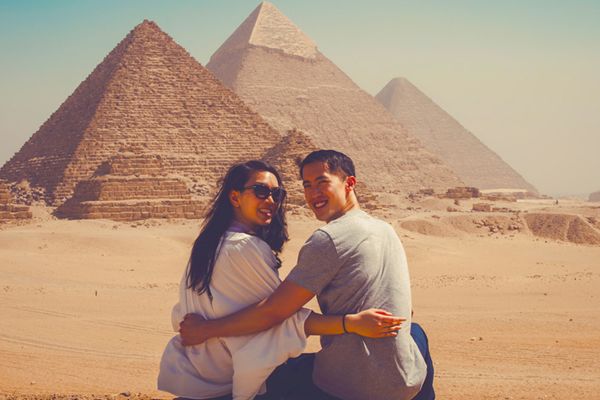
The pyramids are familiar long before you ever see them. They show up in books, films, and photos everywhere. Standing in front of them is different. Familiarity fades quickly once scale and distance register. Silence plays a role, too, especially earlier in the day.
Giza works well as a starting point because it resets expectations. These aren’t abstract symbols. They’re physical structures that still dominate their surroundings. Understanding why they were built where they were, and what they were meant to represent, changes how the rest of Cairo is perceived.
The Sphinx nearby adds another layer to that moment. It has watched the city expand outward over centuries, while remaining fixed in place. That contrast tends to linger.
Later, time spent at the Egyptian Museum helps connect things. Objects that once felt distant suddenly relate to places already seen. Faces and symbols replace vague timelines. History stops feeling theoretical.
Why Sequence Matters More Than Quantity
Seeing landmarks is straightforward. Making sense of them takes a bit more care.
The sequence of places that are experienced may be more important than the number of places visited. When sites are spaced out and explained gradually, impressions settle. When they’re stacked too tightly, they blur.
When the pace slows just enough, you start noticing smaller things. A detail carved into stone. A comment overheard. A question that comes up naturally. Those moments usually stick longer than the highlights.
Day Two: Layers You Don’t Notice at First
Cairo isn’t one city. It’s several, built across long stretches of time, often sharing the same streets.
Islamic Cairo shows how architecture once served belief and community together. Mosques were not detached structures. They acted as meeting places, learning hubs, and sources of neighbourhood living. Walking through these areas, you can see how design adapts to climate and movement as much as faith.
Coptic Cairo feels different. Quieter. Churches sit behind walls that don’t announce their age. The history is more intimate, personal, and inside. This change of the atmosphere is quite perceptible, though difficult to explain initially.
The transition between these places creates an impression of the development of Cairo without destroying the past.
The Moments That Aren’t Planned
Somewhere between the larger sites, there’s usually a pause. Sitting in traffic. Waiting in a shaded courtyard. Standing still while a street clears. These moments aren’t scheduled, but they often register more deeply than expected.
They give the city room to reveal itself without explanation. Rhythm, sound, scale. Sometimes nothing in particular is happening, and that’s when Cairo feels most present.
Day Three: Seeing the City at Eye Level
By the third day, Cairo tends to feel more readable. Not calmer, exactly, but more familiar.
Markets like Khan El Khalili are often described as attractions, though they function first as working spaces. Shopkeepers open up. Crafts continue. Locals pass through without ceremony. Sitting still for a while can tell you more than moving constantly.
This final day usually carries less spectacle. That’s intentional. It allows earlier impressions to settle. Cairo starts to feel lived in rather than symbolic.
Many travelers find this part unexpectedly grounding.
What Structure Actually Helps With:
Cairo can be challenging simply because of its scale. Distances stretch. Traffic follows its own logic. Entry procedures vary from place to place.
A structured 3 Day Cairo Tour Package tends to smooth out those issues before they become noticeable. Transport, timing, and sequencing are handled quietly. Things move along without much friction, which leaves more space for observation.
Who Does This Type of Experience Suit
The type of itinerary is usually effective with those who:
- Is it the first time you are in Cairo?
- Have limited time but want depth
- Are you travelling with family or a small group?
- Plan to continue to Upper Egypt
It doesn’t try to do everything. That restraint is part of its appeal.
Thinking About When to Go
Cairo is open throughout the year, although it is certainly a different place at various points in time. Autumn and spring are the easiest periods, typically, particularly when you are walking frequently. The winter days remain relatively warm, but evenings become colder much earlier than you may imagine. It is hot in summer; there is no escaping it, but the majority of the days are scheduled around it with earlier starts and ample time indoors.
When timing adapts, the experience stays comfortable.
Leaving With a Sense of Place
Cairo doesn’t resolve itself in three days. It never really does. What it offers instead is orientation.
After a few steady days, travelers tend to understand where Egypt begins. They recognise how ancient history, spiritual life, and modern movement overlap. That early context carries forward, often showing up later without much warning.
And it stays with you longer than expected.