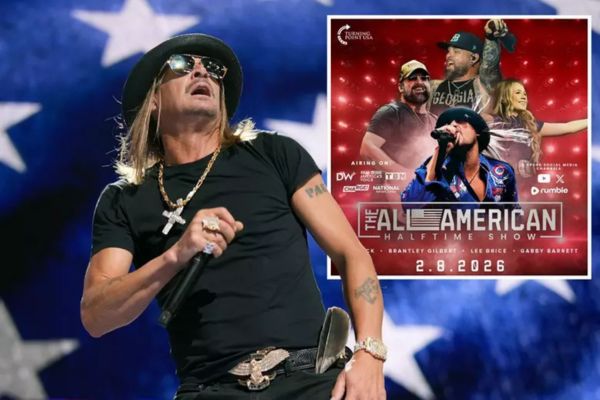
Big halftime moments rarely stay about music anymore. They turn into cultural signals. The TPUSA halftime show followed that pattern from the start. Built outside the NFL broadcast, the event positioned itself as a response, not a replacement. Turning Point USA framed the show around music, identity, and audience alignment. That framing alone pulled attention well before performances began.
The TPUSA halftime show arrived during a period of heightened scrutiny around entertainment choices. Viewers noticed the intent immediately. Supporters welcomed an alternative. Critics questioned its message. Either way, the event refused to blend into the background noise. That reaction explains why the TPUSA halftime show gained traction beyond its runtime.
TPUSA Halftime Show And The Rise Of Alternative Halftime Events
Halftime no longer belongs to one stage. The TPUSA halftime show reflects a broader shift toward parallel viewing experiences. Instead of competing directly with the NFL production, the event offered a separate destination. Turning Point USA leaned into that separation with purpose.
Audiences now gravitate toward content that mirrors personal values. The TPUSA halftime show acknowledged that reality openly. Music served as the anchor, but messaging drove interest. That balance helped the event stand apart from traditional halftime formats.
Similar attempts surfaced in past seasons. Few generated comparable discussion. Timing played a role. So did clarity. The TPUSA halftime show made no effort to appeal to everyone. That decision shaped its visibility and reach.
All-American Halftime Show Lineup And Musical Direction
The all-American halftime show leaned heavily into country and rock roots. That direction felt intentional rather than nostalgic. The lineup reflected genres tied to broad regional audiences. Familiar sounds created accessibility.
Rather than chasing pop trends, the show focused on identity-driven appeal. That choice aligned with the event’s framing. Music here functioned as representation, not spectacle. Fans recognized that difference quickly.
The all-American halftime show also avoided surprise tactics. No sudden guest reveals appeared. Transparency became part of its appeal. Viewers knew what they would hear and why it mattered.
Kid Rock’s Role In The TPUSA Halftime Show
Kid Rock anchored the TPUSA halftime show with name recognition alone. His involvement carried weight across music and political commentary. That overlap amplified interest.
His performance style fit the event’s tone naturally. No reinvention appeared necessary. Supporters viewed his presence as validation. Critics viewed it as provocation. Both reactions fueled conversation.
Within the TPUSA halftime-show structure, his role remained clear. He functioned as a signal to the intended audience. That clarity reduced confusion and increased engagement.
Gabby Barrett, Lee Brice, And Brantley Gilbert Expand The Reach
Gabby Barrett added crossover appeal to the lineup. Her presence connected younger listeners to the event. Lee Brice brought familiarity rooted in mainstream country radio. Brantley Gilbert introduced a harder edge.
Together, the artists widened the audience without shifting tone. Each performer stayed aligned with the event’s musical identity. That balance mattered. The show avoided fragmentation.
Their inclusion reinforced the event’s purpose. The TPUSA halftime show aimed to gather, not surprise. Familiarity became a strength rather than a limitation.
Why This Halftime Show Sparked Industry Debate
The TPUSA halftime show drew attention because it challenged norms quietly. No broadcast disruption occurred. No official rivalry formed. Still, a discussion followed.
Media outlets focused on intent and timing. Viewers debated whether halftime should remain apolitical. Turning Point USA entered that debate without hedging language. That approach invited scrutiny.
The TPUSA halftime show also raised questions about audience segmentation. Entertainment no longer chases mass appeal exclusively. It responds to alignment. That shift unsettles traditional industry assumptions.
What This Moment Signals For Entertainment Going Forward
The TPUSA halftime show reflects a changing entertainment landscape. Viewers now choose experiences based on identity and values. Parallel events will likely continue.
This format may not replace mainstream halftime shows. It does not need to. Its success depends on clarity, not scale. The TPUSA halftime show achieved that clarity.
As coverage continues, platforms like LifestyleGlitz will track how entertainment adapts. The TPUSA halftime show stands as a marker of that transition. It shows where attention flows when audiences feel seen.