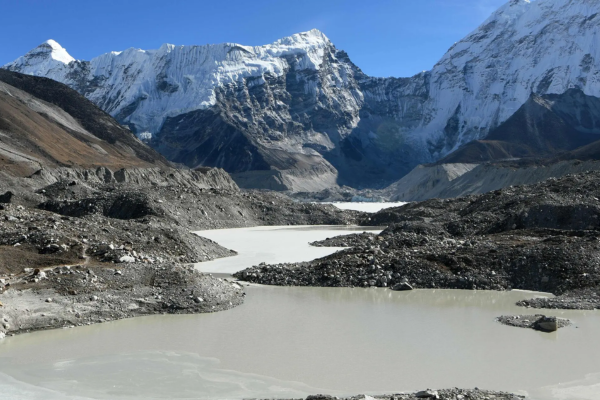
The Nepal glacier collapse has drawn worldwide attention after experts linked it to a destructive flash flood near Nepal’s border with Tibet. The disaster demonstrates how unstable ice, steep mountain terrain and rapidly moving debris can combine to create an emergency with little warning.
What Happened in the Himalayan Region?
According to initial expert assessments, a substantial section of a high-altitude Himalayan glacier broke away and fell into the valley below. Satellite images indicated that the ice detached at an elevation of approximately 5,200 metres before descending more than 1,200 metres.
The impact produced what specialists describe as an ice-rock avalanche. Ice, rocks and sediment entered the surrounding river system, sending a powerful surge downstream through the Bhote Koshi and Trishuli rivers. Water levels reportedly rose rapidly, leaving communities with very limited time to respond. Investigators are also examining whether a recent earthquake contributed to the collapse.
Readers interested in upcoming superhero casting news can explore the latest Kit Connor Cyclops rumors surrounding Marvel’s next X-Men era.
Why Can a Glacier Collapse Cause Flooding?
A glacier contains an enormous quantity of ice. When a large section suddenly detaches, it can displace water, block a river or release water that has accumulated behind ice and debris. The resulting Nepal flash flood carried boulders, sediment and broken ice downstream, making it considerably more dangerous than an ordinary rise in water level.
High temperatures may also weaken glacial structures by accelerating snow and ice melt. However, researchers must examine satellite data, temperature records, seismic activity and the surrounding terrain before identifying the exact cause of the Nepal glacier collapse.
Fans can also explore the latest Disney Frozen 3 first look featuring Anna’s wedding, a possible new villain, and other exciting story details.
Growing Risks Around Himalayan Glaciers
Nepal’s glaciers have experienced substantial ice loss over recent decades. Glacier retreat can affect freshwater supplies, hydropower infrastructure and communities situated along mountain rivers.
The disaster highlights the importance of satellite observation, river-level sensors, evacuation planning and reliable early-warning systems. These measures cannot prevent an ice-rock avalanche, but they may provide communities with crucial time to move away from hazardous areas.
The Nepal glacier collapse remains under investigation. Its full cause may involve several connected factors rather than one isolated event.
Readers can review the latest expert findings on the Nepal glacier collapse for further details about the disaster and its possible causes.
FAQs
What caused the Nepal glacier collapse?
Experts are investigating high temperatures, melting ice, unstable terrain and possible seismic activity as contributing factors.
What is an ice-rock avalanche?
An ice-rock avalanche occurs when a large mixture of glacier ice and rock rapidly falls down a steep mountain slope.
Can glacier collapses be predicted?
Scientists can monitor warning signs, but accurately predicting the precise time of a sudden collapse remains extremely difficult.