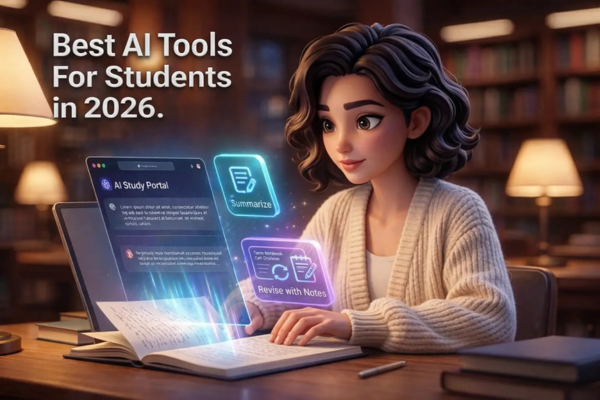
Artificial intelligence has become an essential study companion for students around the world. From researching assignments to organizing notes and improving writing, AI-powered platforms are helping learners save time while developing stronger study habits. As schools and universities continue embracing digital learning, choosing the best AI tools for students can make studying more productive without replacing critical thinking or independent learning. Educational institutions are increasingly recognizing AI literacy and responsible AI use as important skills for the future.
Whether you’re in high school, college, or pursuing postgraduate studies, the right AI tool can simplify complex topics, improve time management, and enhance academic performance.
[For patriotic coverage beyond football, read America 250: Celebrating America’s 250th Birthday on Independence Day 2026.]
Why Students Are Using AI More Than Ever
Modern students manage multiple assignments, projects, presentations, and exams simultaneously. AI tools reduce repetitive tasks, allowing learners to focus on understanding concepts rather than spending hours on formatting or searching for information.
Some of the biggest benefits include:
- Faster research and information gathering
- Personalized explanations for difficult subjects
- Grammar and writing improvement
- Smart note organization
- Study planning and time management
- Practice quizzes and revision support
Experts also emphasize that AI should be used to support learning—not replace genuine understanding or classroom instruction.
Best AI Tools for Students
1. ChatGPT
ChatGPT remains one of the most versatile AI study assistants. Students use it to explain difficult concepts, brainstorm essay ideas, summarize notes, generate practice questions, and prepare for interviews. It works across nearly every academic subject, making it an excellent all-purpose learning companion.
2. Google Gemini
Students who use Google Workspace can benefit from Gemini’s deep integration with Docs, Gmail, and Drive. It assists with document drafting, research, brainstorming, and organizing coursework while fitting naturally into existing study workflows.
3. Perplexity AI
For research projects, Perplexity AI stands out because it provides answers with cited sources. Instead of simply generating text, it helps students verify information, making it useful for reports, presentations, and academic research.
4. Grammarly
Grammarly helps improve grammar, spelling, sentence clarity, and writing tone. Students can polish essays, assignments, scholarship applications, and professional emails while developing stronger writing skills.
5. Notion AI
Notion AI combines note-taking, task management, and content organization in one platform. Students can summarize lecture notes, create study schedules, organize projects, and track deadlines more efficiently.
For knockout action and updates on the on-going worldcup matches, read Portugal vs Spain: Spain Edge Portugal in a Tense World Cup Knockout Battle.
How to Use AI Responsibly
The best AI tools for students should be viewed as learning assistants rather than answer generators. Instead of copying AI-generated content directly into assignments, students should use these platforms to:
- Understand difficult concepts
- Generate study outlines
- Review and improve their writing
- Create revision notes
- Practice solving problems independently
Responsible AI use helps strengthen learning while maintaining academic integrity. Recent educational research suggests that students achieve better outcomes when AI is used to support higher-order thinking instead of simply providing answers.
For further guidance, ScorlarlyHelp explains how AI in education should support learning while protecting academic integrity and responsible use.
The Future of Student Learning
As AI continues to evolve, educational tools are becoming more personalized, interactive, and adaptive. Future AI platforms are expected to recommend customized study plans, identify learning gaps, and provide real-time feedback based on individual progress. Schools are also beginning to integrate AI literacy into their curricula to prepare students for technology-driven careers.
The best AI tools for students are those that encourage curiosity, improve productivity, and make learning more engaging. When used ethically, AI can help students build stronger study habits, manage their workload efficiently, and gain a deeper understanding of the subjects they study.